155 engineering requirements
The 2027 rulebook is written to be judged, not to be designed from. This page turns it into 155 shall-statements, each traced to a rule clause or a Q&A ruling, each given a mission, a type and a primary check. Half of them are gates: a rover can be legal, score well, and still fail on mass, size, power cut-off or a document deadline. The full table is filterable by domain, mission and type, and it is the yardstick every subsystem chapter in this book is measured against.
Key takeaways
- Half the table is a gate. Mandatory rows are 79 of 155, and most of them are checked at a weigh-in, a timed setup or a document review rather than on the course.
- 51 rows cite a Q&A ruling, 40 of those alongside a clause. The operational detail that decides a mission usually lives in the answer, not in the rule.
- 23 rows are derived. They do not transcribe a sentence; they state how a rule becomes a design or test action, and dropping them leaves the rule unimplemented.
- The weakest traces are the scoring-driven rows, because the 2027 task weights for Astrobiology, Delivery and Equipment Servicing are not published. Those rows can be built to and cannot be priced.
What a traced requirement is
Each row pairs a shall-statement with its trace, its missions, a type, a primary check, the affected subsystems and a note. The identifier is stable and is never renumbered when a row is inserted, so a cross-reference from a subsystem chapter stays valid. The trace names the rule clause, the Q&A question, or both, and says derived when the requirement follows from a rule without reproducing its wording. The mission field names the events the row applies to. The type says whether the row is a gate or a target. The check names the primary method. The affected subsystems field is the first pass at an interface list. The notes carry the derivation, the penalty, the 2026 contrast or the missing value.
A derived row is not optional. It is the difference between a rule and an activity: the rule says the sample comes from at least 10 cm below the surface, and the derived rows say what the sampling mechanism, the depth record and the operator interface have to do about it.
The rulebook traces are written as clause references, so the table can be read against Rules, limits and the field clause by clause S-URC27-RULES. A Q&A trace resolves on Q&A rulings, and every derived row is a statement about this rover rather than a quotation S-URC27-QA.
The eleven domains
| Domain | Rows | Mandatory | Scoring-driven | Advisory | What it governs |
|---|---|---|---|---|---|
| SYS | 14 | 13 | 0 | 1 | Mass, the 1.2 m cube, integration, fielded-equipment totals |
| MOB | 11 | 2 | 9 | 0 | Terrain, range, slope, stop distance and payload carriage |
| ARM | 21 | 2 | 17 | 2 | Reach, grasp, torque, insertion, typing and fine alignment |
| SCI | 20 | 16 | 4 | 0 | Life detection, sampling depth, cache, chemical safety, plan |
| PWR | 9 | 5 | 2 | 2 | Battery-only operation, power cut-off, thermal limits, 120 V |
| COM | 15 | 11 | 4 | 0 | Links, bands, antennas, cable, documentation, relay support |
| CMP | 15 | 2 | 10 | 3 | GNSS, tags, cameras, gesture and audio detection, compute split |
| SFT | 19 | 3 | 14 | 2 | Autonomy, aborts, teleoperation limits, mode signalling |
| OPS | 12 | 11 | 0 | 1 | Attendance, runners, the science briefing, schedule, deliverables |
| SAF | 8 | 6 | 0 | 2 | Emergency stop, deployable stops, suit, drone safety |
| DRN | 11 | 8 | 1 | 2 | Airframe, mass, dummy mass, launch pad, pilot, airspace |
| Total | 155 | 79 | 61 | 15 |
Two domains carry the gate risk: SYS, where 13 of 14 rows are mandatory, and OPS, where 11 of 12 are. Two carry the performance risk: ARM and SFT, where 31 of 40 rows are scoring-driven and the task weights are not published S-URC27-RULES.
The full table
The table below is the complete set. Each column sorts; domain, mission and type filter; the search box matches the requirement text and the notes. Use the identifier links to reach a single row, and the download link under the table for a spreadsheet.
Three types, two failure modes
| Type | Rows | Definition | What happens if it is missed |
|---|---|---|---|
| Mandatory | 79 | An explicit rule requirement whose violation is a rule breach, a penalty or an eligibility failure | Points, a mission or the entry is lost, whatever else the rover can do |
| Scoring-driven | 61 | A performance level needed to earn points, not itself a breach | Points are lost in proportion, and the mission may still be completed |
| Advisory | 15 | Encouraged practice, or a good design habit, with no direct points or penalty | Nothing immediate, and a foreseeable failure later |
The distinction decides where the margin goes. A mandatory row with no margin is a risk of losing an event; a scoring-driven row with no margin is a risk of losing points inside an event S-URC27-RULES. The two are budgeted differently.
What each check method means
| Primary check | Rows | What it demonstrates |
|---|---|---|
| Test | 78 | A measured result on the rover, a mock-up or an analog site |
| Inspection | 36 | A physical or documentary attribute, checked at weigh-in or at a review |
| Demonstration | 28 | A behaviour performed once, in sequence, under time |
| Analysis | 13 | A calculation or a model, for requirements that cannot be measured cheaply |
The count is by the first method named, so a row that reads test and inspection is counted as a test. Many mandatory rows are inspections at a weigh-in or a document review, which is why a team can pass every functional test and still fail the table S-URC27-RULES.
Where the coverage is thin
Three limits are worth stating before the table is used as a checklist.
- 102 rows trace to a clause and not to a Q&A ruling. They are only as good as the clause reading, and the 2027 rulebook has clauses whose wording changed in the rewrite, so a requirement inherited from an earlier year has to be re-read rather than carried over.
- The Q&A can move. The 2027 page was revised twice after publication, and 51 rows depend on it S-URC27-QA. A ruling that changes rewrites the trace of every row that cites it.
- The scoring rows carry an unpriced gap. The 2027 task weights for three missions are not published, so a scoring-driven row says what capability is needed and cannot say what it is worth S-URC27-RULES.
Rows a first build is most likely to miss
| Requirement | The trap | What it costs |
|---|---|---|
| REQ-SYS-001 | The cube includes wheels, antenna and every protrusion, in any orientation, with no disassembly S-URC27-RULES §2.a.ii | 40 % of the points earned |
| REQ-SYS-003 | The 70 kg aggregate is strict, and deployed items count inside it | Parts removed at the field, or an entry that cannot weigh in |
| REQ-SYS-008 | Fifteen minutes covers all communications, the base station and the weigh-in | The mission starts late or not at all |
| REQ-PWR-004 | One action must stop movement and remove power from every battery, including compute and radios | The E-stop check fails, and a runaway or a battery fire is unmanaged |
| REQ-COM-009 | The mast is under 3 m, the base within 5 m of the command post, and the cable run is at least 25 m | No link through a metal wall, with no time to improvise |
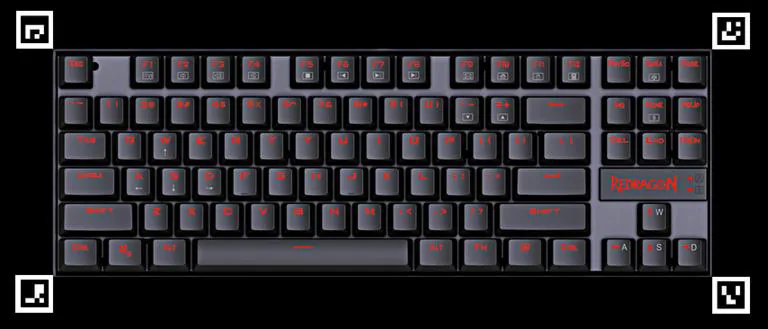
| REQ-ARM-012 | Touching any part of the keyboard in manual control is penalised | The typing task is not attempted legally |
| REQ-CMP-003 | The tags on the key and keyhole are 1 cm squares at task range | The fine-alignment tasks become blind |
| REQ-SCI-001 | Two life detections, at least one a bioassay, are mandatory S-URC27-RULES §1.b.v | The Astrobiology payload is non-compliant before it is tested |
What the rules do not publish
Every row below is a value a design or a test would use, that no 2027 document gives. The right-hand column is the action that produces a usable number S-URC27-RULES S-URC27-QA.
| Missing value | Why it blocks a check | How to settle it |
|---|---|---|
| Astrobiology, Delivery and Equipment task weights | A scoring-driven row cannot be prioritised against another | Watch the science plan and course pages, and ask at the field meeting |
| Delivery stage durations and Stage-1 minimum | The time budget and the gate risk are unknown | Same; 2026 values are a labelled proxy only |
| Slope, step and drop limits for the course | The mobility envelope cannot be tied to a published worst case | Measure an analog obstacle set and document it |
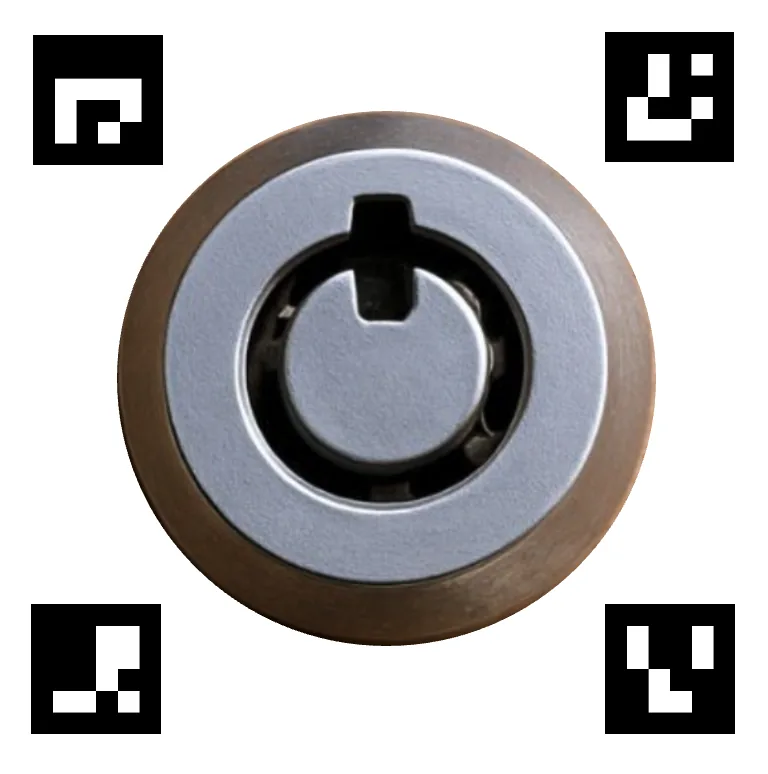
| Sample tube, key, lock and cache dimensions | The interfaces cannot be checked against the real hardware | Build judge-like mock-ups and measure the fits |
| Forces and travels for the hose, valve, latch, buttons and knobs | The end-effector force and compliance cannot be sized | Measure on the specified fittings, with margin |
| Hammer mass and handle geometry | The Fetch! grasp cannot be designed | Measure the linked item and build an equivalent |
| Image resolution and sign-reading distance | The camera and lens cannot be chosen | Test with judge-like signs at plausible distances |
| Penalty above 70 kg, or for a 900 MHz breach | The risk model is incomplete | Ask in writing; treat both as compliance risks |
| Whether 3 m and 5 m antenna limits cover a GNSS base antenna | The base geometry may be constrained more than expected | Ask in writing; design to 3 m meanwhile |
| Whether one instrument can satisfy both life-detection capabilities | The payload architecture changes if it cannot | Ask in writing before the payload is fixed |
| Whether the Equipment cache is the team’s own cache | Two interfaces have to be designed instead of one | Ask in writing; design for both |
The check plan in twelve steps
- Run the weigh-in as a test. Build a 1.2 m gauge, weigh every mission configuration and the 70 kg aggregate, and time the procedure inside a 15-minute setup.
- Time the clock. Fifteen minutes of setup, ten of teardown, ten of retrieval and the ten-minute transition between Autonomy and Equipment, with the real command post and the real cable.
- Test the stop as one action. With compute and radios running, confirm that no subsystem keeps power from any battery.
- Test the link at 1 km and inside a radio shadow, in each of the three 900 MHz sub-bands, and confirm that the rover keeps driving and signals arrival by LED.
- Measure the stop distances. Run the 1 m route stops and the 3 m astronaut stops on natural terrain and report the distribution, not the best pass.
- Build judge-like mock-ups for every servicing task and record the forces and travels the rules omit.
- Test depth and mass. Take at least 5 g from below 10 cm in soil that ranges from easy to very hard, and verify the cache seal when inverted.
- Run the life detection on blind samples and controls. A bench result is not a field capability.
- Test typing with 3, 4, 5 and 6 letter keys, with backspace corrections, no key repeat and a judge reset.
- Test the suit for heat, camera and microphone link, two-way audio and helmet removal, with the electronics that count in the mass and cost budgets.
- Keep every field test away from MDRS. Use a permitted off-road site and plan the campaign before travel.
- Collect the evidence as the tests run. The review is a mission worth 100 points and a gate on the other 400.
Further reading
- Rules, limits and the field holds the clauses these rows trace to.
- Q&A rulings holds the answers behind 51 rows.
- Missions and scoring explains what each mission rewards.
- 110 engineering problems turns the largest subset of these rows into build tasks with acceptance criteria.
- Deadlines carries the document rows in the operations domain.
Sources for this page
- S-URC27-RULESUniversity Rover Challenge 2027 – Requirements and GuidelinesOriginal Archived copy
- S-URC27-QAURC2027 Questions & Answers (updated through 2026-10-11)Original Archived copy