Operator station and operations
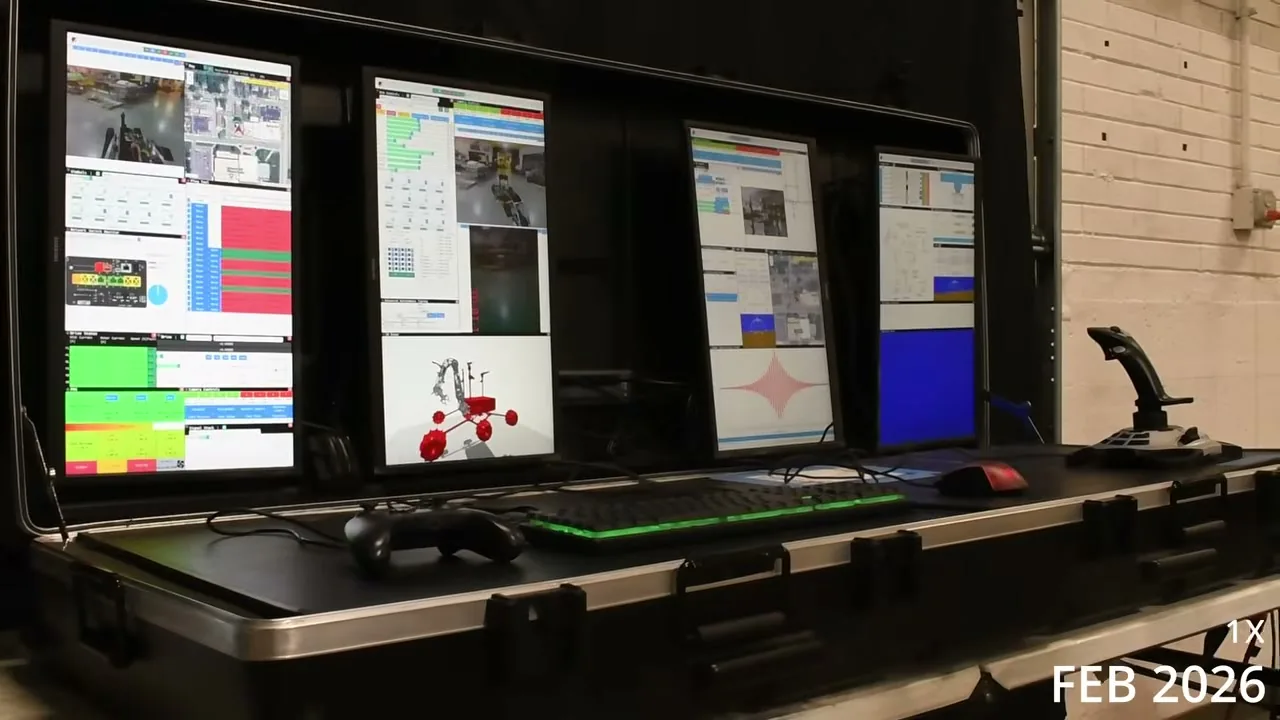
The operator station turns a rover into points, through six people in a metal box with no view of the course. It is not a desk: it is a deployable system with a stopwatch on it, and the stopwatch is scored twice, once in the System Acceptance Review video and once in the mission. Everything here is a 2027 constraint, not an operating preference.
Key takeaways
- The 15 minutes covers all necessary systems including all communications S-URC27-RULES §1.a.ii. Mast, 25 m cable runs, GNSS base, switch, six positions and power all have to be live inside it, in full daylight, with a judge timing.
- Two hats cannot be worn at once: the commander does not drive and does not touch the arm, and the science operator is not the arm operator. Both rules exist to protect the clock and the evidence, not to spread workload.
- Every mission hands the crew a different clock, from 20–30 minutes for Astrobiology to 40 minutes for the two Autonomy sub-missions and as little as 10 minutes between Autonomy and Equipment.
- The abort ladder must be written before the clock starts. In the moment, crews default to “keep trying”, which is how a 5-point Follow! consumes a 50-point route.
What the subsystem must do
The station is a metal trailer unit or an MDRS structure, with the course deliberately invisible from inside, 120 V 60 Hz power, and tables and chairs provided S-URC27-RULES §3.d.i. Six students may be inside and advisors may not; advisors spectate from the field S-URC27-RULES S-URC-LOGISTICS §3.b.ii. Twenty-four students and two advisors register, and 14 people may be on site per competition day, which makes the crew a logistics plan as much as a roster S-URC-LOGISTICS.
Three clocks are fixed by rule and one is fixed by geometry. Setup runs from C2 access to ready to compete in ≤15 minutes, teardown and removal of all equipment in ≤10 minutes, and radio equipment goes off immediately after S-URC27-RULES §1.a.ii. Items deployed in the field, such as repeaters or cameras, may stay until the mission ends but must be recovered inside the same ten minutes S-URC27-RULES §1.a.iii. The antenna may be 3 m tall at most, its base 5 m from the station, guys anchored 10 m out, with 25 m of cable or two runs if the drone carries its own radio S-URC27-RULES S-URC27-RULES S-URC27-QA §2.c.iii §2.c.iv DQ2. Operators must be inside with no view, not standing by the door S-URC27-QA DQ2.
The station is scored twice. The System Acceptance Review awards 8 of 100 points for communications, command and control and operations, judged on the station being used during demonstrations and on the state of operational testing, and the written report awards a further 1 % for approach to team training S-URC26-SAR. A crew that treats the station as furniture loses both quietly.
The numbers that size the design
The rule rows are sourced. The latency and staffing rows are design targets, because no team publishes a measurement.
| Quantity | Value | Basis |
|---|---|---|
| Setup and teardown | ≤15 min and ≤10 min, then radios off | Includes antenna, cable, GNSS base, network and six stations S-URC27-RULES §1.a.ii |
| People | ≤6 inside; 24 students and 2 advisors registered; 14 per day | S-URC-LOGISTICS |
| Antenna and cable | mast ≤3 m, base ≤5 m from the station, guys ≤10 m, ≥25 m of cable | Two runs if the drone has its own radio S-URC27-QA DQ2 |
| Mission clocks | Astrobiology 20–30 · Delivery 30–60 staged · Equipment 30 · Autonomy 40 · Autonomy to Equipment 10 | Two clocks inside one Autonomy mission |
| Operator-facing latency targets | glass-to-glass 250–300 ms, 15 fps drive stream, command round trip 100 ms, jitter 50 ms | No team publishes a measurement, so these are targets |
| Sub-band change | ≤2 min by one person, procedure on the card | The schedule assigns the sub-band per mission S-URC27-RULES §2.c.v |
| Scoring exposure | 8 of 100 review points for station and operations; 1 % for training | The station is scored twice S-URC26-SAR |
| Power allowance | assume ≤10 A continuous on one circuit | The rules state 120 V 60 Hz and say nothing about current |
Design space, in one table
| Decision | Options | Recommended for a first build |
|---|---|---|
| Physical estate | URC trailer only · console in a moulded case · a laptop per operator · one large monitor · a video wall | Console in a moulded case: one case, four screens, a known-good loom, seconds to deploy |
| Interface architecture | monolithic dashboard · per-role pages · multi-client web app · mixed third-party viewers | Per-role pages in one app, camera-dominant, with a map inset and a state banner, served to several machines |
| Input devices | gamepad · joystick · keyboard and mouse · a labelled button box | Gamepad for driving and a joystick for the arm, plus labelled buttons for autonomy, radio off and the hands-off display |
| Station compute and network | two business switches trunked over the radio links · browser clients on a local network · recording at both ends · a battery buffer | A managed switch with a saved known-good configuration, a battery buffer for the switch and one laptop, and recording at both ends |
| Staffing | six fixed seats plus field crew · six plus a station-clean science pair · four seats · five | Six fixed seats with named alternates, plus two station-clean people for the science debrief |
| Procedure | laminated card per mission · digital checklist · memory | A laminated card carrying setup order, roles, clock plan, abort thresholds and the named owner of radio-off |
The 15 minutes is a system-integration test
The clock covers all necessary systems, including all communications S-URC27-RULES §1.a.ii. That makes it a test of the whole rover programme, not of packing speed, and the review judges score exactly this in the video S-URC26-SAR. A worked sequence that fits: cases and tables by 2:00, both cable runs with mast and guys by 6:00, the GNSS base logging by 8:00, every page loading and the mission’s sub-band set by 10:00, weigh-in and cube check by 12:00, the voice check with spotter, runners and astronaut by 14:00, and the commander’s opening call at 15:00.
Three margins make that repeatable rather than lucky. A 3-minute setup and 2-minute teardown margin turns 15 and 10 into targets of 12 and 8. A “last two minutes” pair whose only job is cable and mast removes the end-of-setup scramble. Radio-off as the last checklist line with a named owner prevents the small rule violation that happens after everyone relaxes S-URC27-RULES §2.c.i.
The environment is part of the test. Events run in full daylight, up to 37.8 °C, in a metal box S-URC27-RULES S-URC27-RULES §3.d.i §3.d.iii. Glossy laptop panels are the default failure at these ambient levels; no URC statement covers screen brightness, so matte panels, hoods, water and a rotation plan are design items rather than comfort items.
The clock is a role, not a gadget
Every mission hands the crew a different clock, and the operator’s biggest lever is how it is divided. A planning model for a 30-minute Astrobiology run shows where the decisions sit; the numbers are a construction from the rule limits and the task structure, not a measured trace of any team.
| Stage | Clock | Owner | Decision at the end |
|---|---|---|---|
| Opening call, final checks, start | 0:00–1:00 | Commander | The clock start is confirmed to the crew aloud |
| Drive to site 1 | 1:00–6:00 | Driver, with science calling candidates | Site 1 is committed, or the drive continues |
| Site 1 survey | 6:00–10:00 | Science and arm | The site is accepted for a sample or rejected |
| Sample to 10 cm depth | 10:00–16:00 | Arm, with the driver repositioning | Has 10 cm been reached, and how many more attempts are justified? |
| First instrument run | 16:00–21:00 | Science | Is the signal interpretable? |
| Second site or second capability | 21:00–25:00 | Commander decides | Site 2 is abandoned at 25:00 regardless |
| Cache seal and hand-off | 25:00–29:00 | Arm and commander | The cache must be removable within 5 min of the roving end S-URC27-RULES §1.b.vii |
| Stop and debrief | 29:00–30:00 | Commander and the station-clean pair | The debrief starts even if the rover failed S-URC27-RULES §1.b.x |
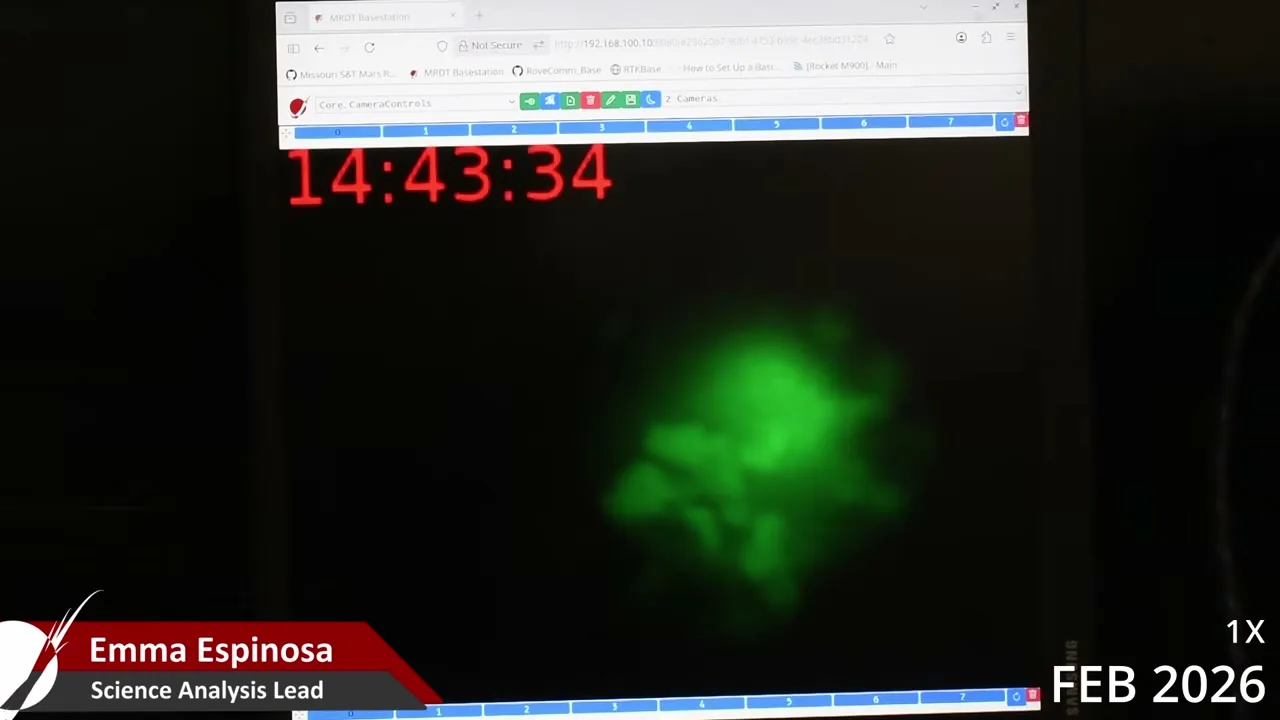
Three rules make a timekeeper real. One clock, read aloud at stage boundaries and embedded in the page the operator is watching. Pre-declared decision points, because without them abandoning a task feels like failure and crews do not do it. And a hard last useful minute, so the second Autonomy target is never started so late that the rover is still driving at 40:00.
The abort ladder is written down before the mission
Every 2027 mission has a legal way to give up ground and keep the rest, and the ladder only works if it is decided while the crew is calm.
| Situation | Correct 2027 action | Cost |
|---|---|---|
| Autonomy rover not progressing | Operators send stop and return to the astronaut | 20 % of that task |
| Rover must be driven out of a bad position | Teleoperate back to a previously visited point | 50 %, capped per task |
| Rover stuck or broken | Request an intervention, runners go out | 20 % of the mission, clock running |
| Spectator touches the rover unasked | Treated as an emergency stop | Mission over, points to that moment kept |
| Typing attempt going wrong | Abort and restart; judges reset the display | No penalty, clock only |
The ladder is written because the alternative is a habit. The intervention ladder in particular punishes the second bad decision, not the first: two interventions in one mission leave 60 % of the points earned S-URC27-RULES §3.e.viii. A team member who leaves the station as a runner cannot operate again that mission S-URC27-RULES §3.e.iii, so the runners are named before the mission and the forfeit is stated out loud.
Six seats, and the two rules that make them work
URC mandates a maximum of six students and a set of operator conduct rules, not a roster. The seat plan below is a design recommendation that fits both.
| Seat | Owns | Must see on their own screen | Failure if the seat is empty |
|---|---|---|---|
| Commander | The clock, go or no-go, judge liaison, the abort decision | Mission clock, rover state, all task states, link status, battery, a copy of the driver’s camera | The mission drifts past the last useful minute and nobody dares abandon a failing task |
| Driver | Teleoperation: the only hands on drive controls | Three or four cameras, heading and attitude, speed, wheel current, position, map | The rover is slow, gets stuck, or drives over the sample site |
| Arm and payload | Arm joints, gripper, end-effector changes, task order at the lander | Arm and wrist cameras, joint angles, a kinematic twin, gripper state, force or current | Equipment Servicing collapses, and the arm takes its own camera with it S-MONASH-IEEE-RAM |
| Science | Site triage, instrument runs, sample provenance, the report | Instrument data, sample depth and identity log, panoramas with cardinal directions, position with accuracy | Sites are chosen on impression, and the 10 cm provenance is lost at the debrief |
| Autonomy | Targets, route, state machine, the behind-the-hill task | Map with planned path and stay-out zones, the autonomous banner, target list, progress against the clock | The rover sits still while the crew debugs, or someone touches a control and voids the run |
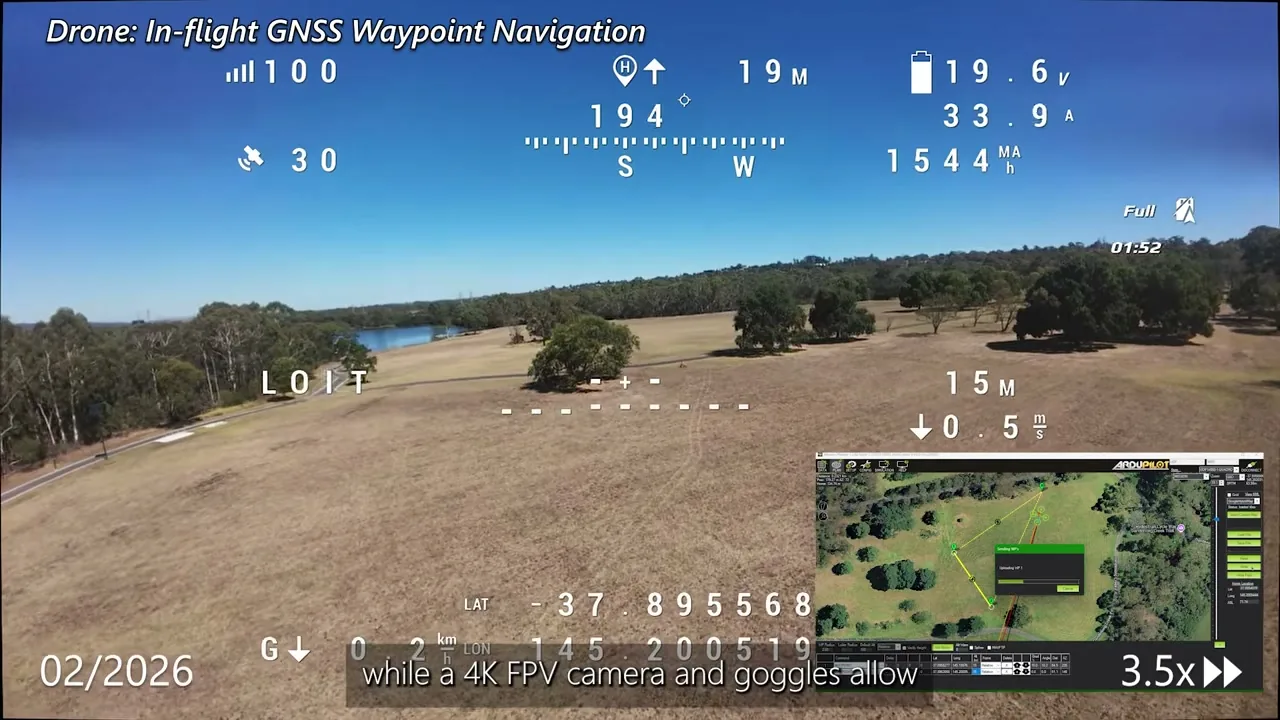
| Drone pilot | Drone flight, video, relay deployment | Drone camera, battery, altitude and attitude, spotter voice channel | The one asset that sees beyond the hill is never used, or is used unsafely |
Two structural rules carry the roster. The commander does not drive and does not touch the arm: the moment the person with the clock is inside the task, the clock stops being anyone’s job. Science is not the arm operator: sampling is a manipulator task and a provenance task, and combining them forces a choice between moving soil and recording why.
Two compliance surfaces follow. Hands-off is enforced by observation rather than by code S-URC27-QA AUQ21, so the procedure is visible: announce entering autonomous mode, confirm the rear LED is red, put both hands on the desk edge with palms visible, and hang the gamepad on a hook. Drone control is a separate chair: the pilot sits inside with no view, the spotter holds visual line of sight and may take control, and only the pilot touches controls while the rover drives autonomously S-URC27-RULES S-URC27-QA §2.b.xii AUQ25.
Interfaces that bite
- Communications. The 15 minutes is shared: if the mast takes six, the stations get nine. The station needs signal strength per link, a sub-band change one person can run in two minutes, and antenna-aim feedback that does not need a camera.
- Software. Autonomy state must be published as data rather than inferred from behaviour, or the hands-off check becomes an argument S-URC27-QA AUQ21. Telemetry needs timestamps and a replayable log.
- Arm. One USB hub feeding every end-effector camera is a single point of failure: Monash nearly lost all of its arm cameras to one snagged cable in 2023 S-MONASH-IEEE-RAM.
- Astronaut. Quiet is required only for a gesture Follow!, and talking is encouraged at every other moment S-URC27-QA AUQ15. The station owns that switch deliberately.
- Systems engineering. The schedule must show integrated operations tests and operator training, because the review scores both. The station kit is not rover mass, but it is luggage against the 14-per-day limit.
Failure modes
- The link that worked in the motel. The judges name this as the single most common way a team fails: the rover works in the parking lot and not at the site, because of a loose wire or connector S-URC-ADVICE. The prevention is a labelled loom, one spare of every connector, and a link test as a checklist item on arrival.
- Setup overrun. The mast and guys are the slowest items and everything wants the same three minutes at the end. Pre-attached guys, a cable reel with the connector already fitted, and a radio-off master switch reachable without crawling under a table fix most of it.
- The rule violation that looks like bad luck. An operator leaves the station to help and comes back to keep operating S-URC27-RULES §3.e.iii; a spectator touches the rover S-URC27-RULES §3.e.ii; a keyboard is touched during autonomous typing S-URC27-QA EQ2. Each is a procedure failure with a written prevention.
- The task that eats the clock. A staged Delivery mission makes Stage 1 a gate: Missouri S&T scored 15 in 2023 because Stage 1 was not cleared S-URC23-SCORES. Stage 1 is not a warm-up, it is the mission.
- The search that never converges. A search area plus a low-contrast target plus no declared abandonment threshold is how a 30-minute mission ends with 15 points S-MONASH-IEEE-RAM.
- Heat and glare. Operators who cannot read their screens make different and worse decisions. Matte or hooded panels, water, and a rotation plan are part of the station, not comforts.
- The intervention spiral. A crew that intervenes once early tends to intervene again. The commander’s job is to decide whether the mission is still worth points before the runner leaves the station.
Shortlist for a first build
| Item | Quantity | Why |
|---|---|---|
| Moulded hard cases used as console tables | 1–2 | Doubles as furniture and protection, and carries the loom |
| Matte 15–17 inch USB-C monitors | 3–4 | One per information role; matte beats glossy in sun |
| Laptops, one per operator or one plus thin clients | 4–6 | A dead machine must be swappable in minutes |
| Managed gigabit switch with labelled leads | 1 plus 8 | A known-good configuration saved to a stick |
| Gamepad and joystick | 2 plus 1–2 | Driving needs two analogue axes; the arm needs fine proportional control |
| Antenna mast of 3 m or less with pre-attached guys | 1 | The slowest single setup item |
| 25 m low-loss cable runs, connectors fitted, on reels | 2 | Rover and drone; the rules require at least 25 m |
| GNSS base with tripod and correction link | 1 | An own base station is required, since no correction service is available S-URC27-QA RQ11 |
| Power strips, 10 A fused | 2 | 120 V 60 Hz only, and one circuit until measured |
| Battery buffer for the switch and one laptop | 1 | No battery buffer is provided by the organisers |
| Laminated mission cards and grease pencil | 5 | Survives dust, heat and a power loss |
Open problems
- What is the station’s power capacity? No current limit, circuit count or battery buffer is published. Asking the competition organisers and measuring at the site meeting settles it; until then, design to 10 A continuous.
- What is the table geometry inside the trailer? The six-seat layout assumes a 20 ft box. Photographing and measuring at the first site visit settles it.
- What is the real glass-to-glass latency? No team publishes a measurement, so 250–300 ms is a target. A measurement at 25 m and at 1 km turns it into a specification.
- How many camera streams can one operator page carry? A load test on the actual laptops and the actual radio settles it, and the figure belongs in the interface specification.
- May the debrief pair watch field video during the mission? The rule excludes members who have seen the site with their own eyes, and video is not direct sight. Asking the science judges in writing before the review settles it.
- What are the 2027 Delivery stage boundaries and time splits? They set the Stage 1 gate and the carry-forward decision, and they are promised before the competition.
Further reading
- Missouri S&T shows the console-in-a-case pattern and a station built by a team that wins with it.
- Monash shows the per-role web interface, six station crew and seven field crew per mission S-MONASH-NEWS2025.
- WVU Team Mountaineers publishes the clearest fault-injection practice in the field, including a documented unplugging test S-WVU-SAR2026.
- Software stack and autonomy owns the state machine and the hands-off behaviour this page depends on.
- Communications and networking owns the link, the antenna and the sub-band plan.
- Review, judging and awards sets out how the station is scored in the System Acceptance Review.
Sources for this page
- S-URC27-RULESUniversity Rover Challenge 2027 – Requirements and GuidelinesOriginal Archived copy
- S-URC-LOGISTICSURC LogisticsOriginal Archived copy
- S-URC27-QAURC2027 Questions & Answers (updated through 2026-10-11)Original Archived copy
- S-URC26-SARURC2026 System Acceptance Review Requirements + SAR Q&AOriginal
- S-MONASH-IEEE-RAMA Tale of Two Rovers: How Different Philosophies Foster Innovation in the 2023 University Rover ChallengeOriginal
- S-URC-ADVICEURC Advice (judges' systems-engineering lessons)Original Archived copy
- S-URC23-SCORESURC2023 Official ScoresOriginal
- S-MONASH-NEWS2025Monash Nova Rover Shines at 2025 University Rover ChallengeOriginal
- S-WVU-SAR2026Team Mountaineers System Acceptance Review 2026 (rover "Deimos"): tri-modal 2.4 GHz + 5.8 GHz + 70 cm, gimbal camera on antenna mast, 750 m LOS / 164 m NLOS high-noise test, antenna + radio budget linesOriginal