Team dossiers
Fifty-one team profiles sit in this part of the reference: 8 in Tier A, 24 in Tier B and 19 in Tier C. Each one follows the same order, from identity and results through to the team’s own sources, so that two profiles can be compared section by section. Every profile exists because the team published enough design material to support it.
Key takeaways
- The 19 Tier-C profiles are 17 census teams plus the two registered programmes, Space Exploration Alberta Robotics and UW Robotics, which hold no finals result and are profiled for their published design material.
- A further nineteen census teams have no profile because they publish almost nothing. They are listed on the census page, not hidden.
- Every profile keeps the team’s own rover names and years, and each one states what remains uncertain before its source list.
- A profile is an evidence record, not a ranking. The tier and the results table say where the team finished; the rest says what it built.
What a profile contains
Every dossier follows the same nine sections.
- Header figures. Tier, country, first and last appearance, best overall result and the number of sources cited.
- What the team shows. Two to four conclusions from its record.
- Identity and results. A results table with year, rover, total, rank and the four mission scores.
- Rover generations. One short entry per year or platform, using the team’s own names.
- Subsystems. Mobility, arm, science, comms, power and compute, where the evidence exists.
- Mission performance. What happened in the field and why, taken from reports, videos and news.
- Lessons for a first build. Three to six causal lessons, not general advice.
- What remains uncertain. The open questions, rewritten as limits on what is known.
- Team sources. The team’s site, code archive, videos and papers, in addition to the generated source list.
Sections are as long as the evidence allows. A team that publishes one video and a results row has a short profile, and the shortness is itself the finding.
Tier A: the eight programmes
These are the teams that reached a podium or combined a top-eight finish with full public documentation. They are the best starting point for architecture and process, and the subsystem parts of this reference quote them throughout.
| Team | Country | Finals | Best rank |
|---|---|---|---|
| AGH Space Systems | Poland | 3 | 1 |
| Missouri S&T Mars Rover Design Team | United States | 5 | 1 |
| Michigan Mars Rover Team (MRover) | United States | 5 | 1 |
| Team Mountaineers (WVU) | United States | 5 | 1 |
| Monash Nova Rover | Australia | 5 | 2 |
| BYU Mars Rover | United States | 5 | 3 |
| Northeastern University Mars Rover Team | United States | 5 | 3 |
| UIU Mars Rover | Bangladesh | 5 | 3 |
Finals counts the seasons in which the team recorded a mission score; best rank is its lowest finals position in 2022–2026 S-CENSUS.
Missouri S&T and WVU between them hold three of the five titles in the window, and their profiles are the two most complete records of a mature programme. AGH’s profile covers a champion that also races in Europe, and UIU’s covers the strongest sustained climb in the field, from thirteenth in 2022 to third in 2026.
Tier B: the twenty-four mid-field programmes
Tier B holds consistent top-20 finishers, strong single seasons and documented teams with mid-field results. Several are more useful to a first build than a champion, because they show a working rover at a realistic score level.
| Team | Country | Finals | Best rank |
|---|---|---|---|
| IMPULS | Poland | 2 | 5 |
| Legendary Rover (PRz) | Poland | 2 | 5 |
| Yonder Dynamics (UC San Diego) | United States | 5 | 5 |
| A.S.T.R.A. (Alabama-Huntsville) | United States | 5 | 6 |
| BRACU Mongol-Tori | Bangladesh | 4 | 7 |
| Queen’s Space Engineering Team (QSET) | Canada | 5 | 7 |
| Sooner Rover Team | United States | 4 | 7 |
| ARES Project (Tohoku/Keio) | International (multi-country) | 3 | 8 |
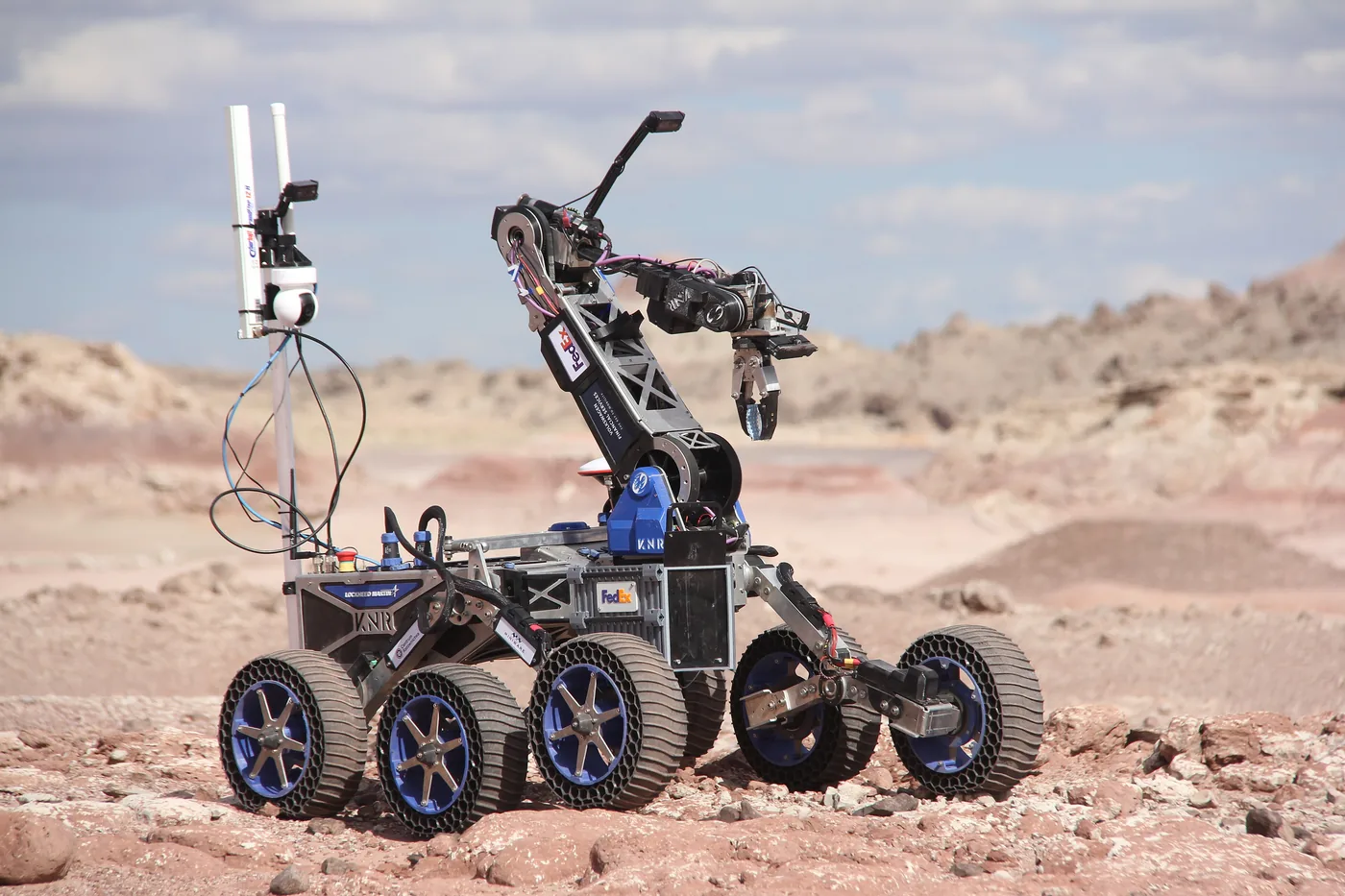
| KNR Rover Team | Poland | 2 | 9 |
| Quantum Robotics | Mexico | 4 | 10 |
| MAVRIC (Iowa State) | United States | 2 | 11 |
| MIST Mongol Barota | Bangladesh | 2 | 11 |
| PCz Rover Team | Poland | 2 | 11 |
| Toronto MetRobotics (TMR) | Canada | 4 | 11 |
| SKA Robotics | Poland | 2 | 12 |
| Wisconsin Robotics | United States | 3 | 12 |
| New Haven Robotics | United States | 3 | 13 |
| Project Scorpio | Poland | 3 | 13 |
| DAM Robotics (Oregon State) | United States | 2 | 15 |
| Robotics for Space Exploration (RSX) | Canada | 3 | 15 |
| SC Robotics | United States | 4 | 17 |
| Mars Rover Manipal | India | 2 | 18 |
| IITB Mars Rover Team | India | 2 | 19 |
| Husky Robotics | United States | 2 | 29 |
Finals counts the seasons in which the team recorded a mission score; best rank is its lowest finals position in 2022–2026 S-CENSUS.
Tier C: the nineteen profiles
Tier C is everything the rule does not put in A or B, including every team that never reached a finals field. Only teams with enough published material carry a profile here.
| Team | Country | Finals | Best rank |
|---|---|---|---|
| Mars Rover UdeG Space | Mexico | 3 | 14 |
| ITU Rover Team | Türkiye | 3 | 15 |
| YILDIZ ROVER | Türkiye | 5 | 16 |
| Project Altair (IUT) | Bangladesh | 1 | 18 |
| Binghamton University Rover Team | United States | 3 | 20 |
| Carleton Planetary Robotics Team (CPRT) | Canada | 2 | 21 |
| Ceres (Universidad de los Andes) | Colombia | 1 | 21 |
| Robocol (Universidad de los Andes) | Colombia | 2 | 22 |
| Team Interplanetar (BUET) | Bangladesh | 2 | 23 |
| Space Concordia (Concordia University) | Canada | 2 | 24 |
| Team RoSE (Robotic Space Exploration) | United States | 3 | 24 |
| Cornell Mars Rover | United States | 4 | 25 |
| KARURA (international) | International (multi-country) | 3 | 27 |
| Team Anveshak (IIT Madras) | India | 1 | 30 |
| UMD Loop | United States | 1 | 32 |
| Ad Astra (Sairam) | India | 1 | 33 |
| UBC Rover | Canada | 0 | No finals result |
| Space Exploration Alberta Robotics (SPEAR) | Canada | 0 | No finals result |
| UW Robotics / UWRT | Canada | 0 | No finals result |
Finals counts the seasons in which the team recorded a mission score S-CENSUS. UBC Rover holds one SAR-only row, a 92.64 in 2025 S-URC25-SCORES. Alberta and UW Robotics are registered teams with no score-sheet row; they are profiled because they publish design material.
The two registered programmes sit outside the census entirely. Both are Canadian university clubs that registered across the window without reaching the field, and both publish enough about their rovers to be worth a study. Their profiles carry no results table, and say so.
The nineteen census teams without a profile
Nineteen census teams have none. The public record for most of them is a single score-sheet line and a club website, with no design report, paper or code archive behind it, so a profile would be a page of general description rather than evidence.
Eighteen of the nineteen hold at most one finals appearance, thirteen hold exactly one, and five never recorded a mission score at all. The census page lists all nineteen with their seasons and what is public about each S-CENSUS.
Reading a profile
The results table at the top is the part worth reading first: it gives the team’s score level, its consistency and the missions where it collapses. A mission profile with one strong year and four weak ones describes a different programme from one with five steady mid-field years, even when the mean total is identical.
Two habits help a comparison. The rover name and year belong before the subsystem text, because a team that builds a new rover every season has different lessons from one that develops a single platform. And the uncertainties section is part of the evidence: a team that publishes architecture but not mass, or video but not measurements, says as much about the state of the field as its score does.
Where to go next
- The 68-team census carries the full team list and the tiering rule.
- Team browser filters the same records into cards.
- The URC landscape reads the tiers as strategy.
- Results explorer, 2022–2026 shows the per-mission scores behind every results table.
- Team dossier index collects the profiles in one generated table.
Sources for this page
- S-URC26-SCORESURC2026 Official ScoresOriginal Archived copy
- S-CENSUSURC team census, master index (68 teams, 187 team-year rows, tiers, documentation test)Print copy
- S-URC25-SCORESURC2025 Official ScoresOriginal