KARURA (international: Texas A&M + Japanese universities)
KARURA was the first Japanese and the first international team to reach a URC finals, in 2024. Across three finals its Autonomy score has been zero every time, and Delivery produced 8, 10 and 0. What makes the team worth reading is the documentation: a peer-reviewed paper on the payload, 16 public code projects and two independent university accounts, including the team’s own explanation of why the 2026 result looked worse than the rover.
What this team shows
- Autonomy at zero in three consecutive finals is decisive under a scoring model where that mission is a quarter of the points. No team reaches the mid-field with a permanent zero.
- Delivery at 8, 10 and 0 is the second permanent gap. Two of the four mission families have effectively never been built.
- The other two missions are good: Science at 74, 73 and 86 and Equipment Servicing at 15, 27 and 20.53. The rover is not the weak part.
- Modularity across two national builds, two rovers at a Japanese competition and one merged machine for Utah, is an unusually ambitious use of modularity, and it costs a season of integration.
Identity and results
KARURA is a multi-institution project combining Texas A&M University with students from Japanese universities, including Shinshu, Keio, Tokyo, Waseda and Tohoku, with the roster changing year to year S-CENSUS. It was founded in spring 2023 by Hirokuni Kakiuchi and Haruto Seto of Shinshu University and reached the finals for the first time in 2024 S-KARURA-BATTALION. The project site describes 2026 as a third consecutive finals appearance S-KARURA-SITE. Tier C is the census label for three finals at a mean rank of 28.3; the tier rule is defined on the census page.
The project and the machine share the name, and the per-year machines are referred to as the 2024 rover, the 2025 rover and the merged 2026 rover S-KARURA-BATTALION S-KARURA-TAMU.
| Year | Rover | Total | Rank | Field | SAR | Science | Delivery | Equipment | Autonomy |
|---|---|---|---|---|---|---|---|---|---|
| 2024 | 2024 rover | 187.49 | 27 | 34 | 90.49 | 74 | 8 | 15 | 0 |
| 2025 | 2025 rover | 198.85 | 31 | 35 | 88.85 | 73 | 10 | 27 | 0 |
| 2026 | merged rover | 186.64 | 27 | 36 | 80.11 | 86 | 0 | 20.53 | 0 |
Texas A&M’s account of 2026 gives the placing as 27th out of 38 teams. Both figures are correct: 38 is the number of rows in the 2026 sheet, and 36 of those teams recorded mission scores S-KARURA-TAMU S-CENSUS.
The rover and its subsystems
Mobility and mass. The team’s engineering lead named rover weight as the main 2025 goal, with the wheel material and size identified as the obvious place to save it S-KARURA-BATTALION. For 2026 the Japanese and American halves fielded separate rovers in separate categories at the Tottori Rover Challenge, and then, because the components were modular, combined the best pieces into one machine for Utah S-KARURA-TAMU. Chassis material, mass, wheel diameter and drive motors are not published.
Arm and end-effectors. The 2024 problem is stated plainly by the team: the arm struggled to pick up heavy objects and carry them far S-KARURA-BATTALION. The attempted fix was a custom cycloidal gear set for one high-torque joint, designed in Japan, and the public record includes a ROS 2 arm model with an inverse-kinematics configuration. Encoder driver projects for two absolute-encoder families sit alongside a PID project in the same organisation, which is consistent with one encoder per arm joint S-KARURA-GH.
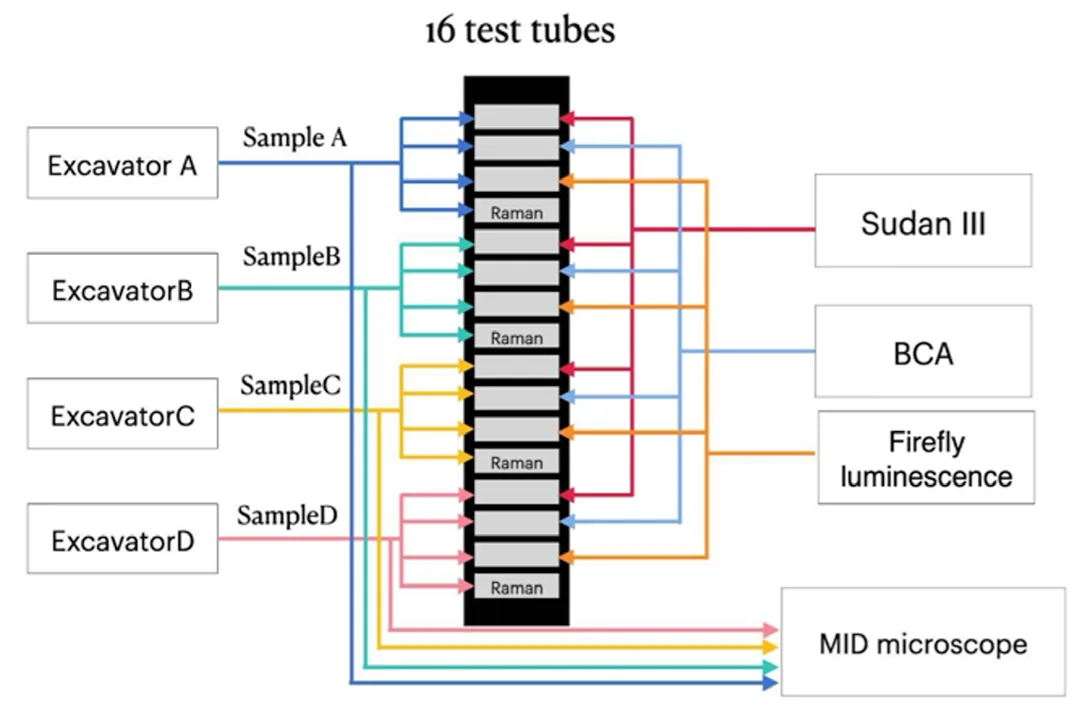
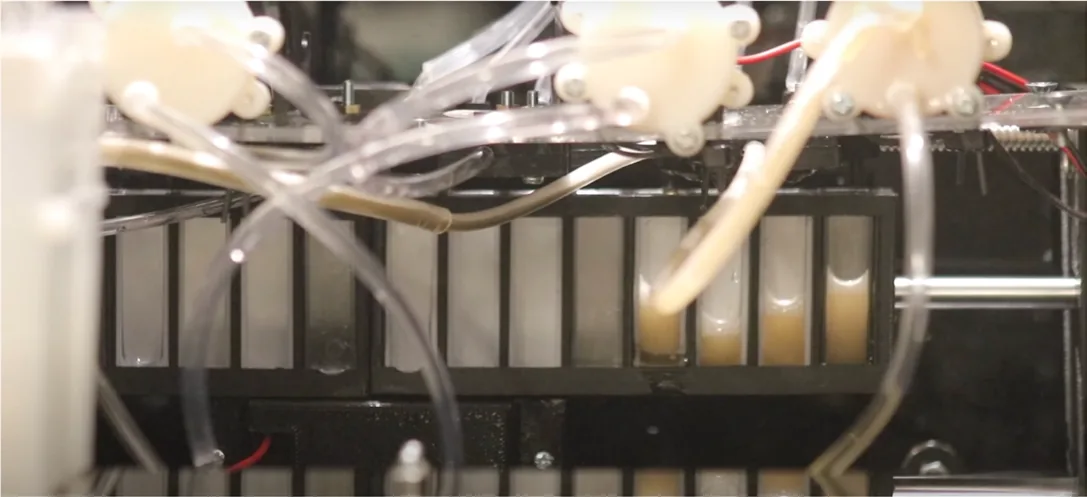
Science. The payload is documented in a peer-reviewed paper, which is rare in this part of the field. The team published a peer-reviewed description of the rover and its life-detection work in the Planetary Science Society of Japan journal, volume 33 number 3, pages 342 to 349, in 2024, by Hirai, Takase, Ozu, Hamada, Horie and Furukawa S-KARURA-2024-PAPER. The paper records an ATP and BCA assay payload, a sampler destroyed by a rock, and a 74-point salvage. That salvage is the 2024 Science score.
Communications and software. Radio frequency communication is a named subteam responsibility, with public projects for the 2026 communications code and a small-rover variant S-KARURA-TAMU S-KARURA-GH. The rest of the public code describes a ROS 2 architecture on Raspberry Pi class computers: a unified CAN bridge for the team’s boards, a control-station interface, keyboard input publishing and motor drivers S-KARURA-GH. Radio make, band and power are unpublished.
Delivery. No source describes the capture or carry mechanism, and the mission returned 0 in 2026.
Mission performance
2024, 27th of 34. A review score of 90.49 and Science at 74 carried the total; Delivery 8, Equipment Servicing 15 and Autonomy 0 did not S-URC24-SCORES. In the year the sampler was destroyed by a rock, the payload still salvaged 74 points.
2025, 31st of 35. Science 73, Equipment Servicing 27, Delivery 10 and Autonomy still zero S-URC25-SCORES. A better total than 2024 and a worse rank, because the field improved faster.
2026, 27th of 36. The best Science score of the three, 86, with Delivery at 0, Equipment Servicing at 20.53, Autonomy at 0 and the lowest review score of the three years, 80.11 S-URC26-SCORES. The team’s own account is that it arrived with a viable rover, that the points were not a reflection of the machine, and that the rover was capable of actions it could not perform in earlier years S-KARURA-TAMU.
That last point is true and dangerous. Points are the only thing the competition scores, so capability that does not convert is, for competition purposes, capability that does not exist.
Lessons for a first build
- Two permanent zeros decide the result. Autonomy at 0, 0, 0 and Delivery at 8, 10, 0 take two of four mission families out of play before the rover arrives. Every other improvement is capped by those two numbers.
- Read the team’s own published failure before designing a drill. A sampler destroyed by a rock and a salvage score is the cheapest lesson on this page, and it comes from a peer-reviewed paper S-KARURA-2024-PAPER.
- Sixteen tubes is a cross-contamination strategy. Independent sample paths per assay cost mass and volume, and they remove the failure mode where one contaminated line invalidates every result.
- Modularity has a price in integration. Building two rovers on two continents and merging the best modules is a strong idea, and it consumes the season that would otherwise go into rehearsal.
- Convert capability into points. A team can be proud of what the rover can do and still finish 27th, and the score sheet is the only record that persists.
What remains uncertain
Why autonomy has scored zero across three rovers, including the merged 2026 machine, is not stated anywhere. Rover mass, dimensions, wheel and suspension type, drive motors and battery are unpublished despite the strong software disclosure. Which universities contributed in which year is unclear, because the official university string lists 15 to 24 institutions and no stable roster exists. The newspaper claim that the science department uses electron microscopes is a paraphrase of a student quote and is not corroborated by a team document. The 2026 delivery mechanism is not described in any source reached.
Team sources
- karura-project.studio.site, the project site, with the three departments and the finals record.
- Journal paper, “International development of a student Mars rover and life detection”, the payload, the assay set and the 2024 sampler failure.
- The Battalion, 2025-02-13, the 2025 engineering priorities and the arm problem in the team’s words.
- Texas A&M Engineering News, 2026-09-17, the two-rover season and the team’s reading of the 2026 result.
- karura-project on GitHub, 16 public code projects.
- University Rover Challenge, the competition whose official score sheets carry the results above.
Sources for this page
- S-CENSUSURC team census, master index (68 teams, 187 team-year rows, tiers, documentation test)Print copy
- S-KARURA-BATTALION"KARURA Project to compete in 2025 University Mars Rover Challenge", founding (spring 2023), 2024 arm weakness, custom cycloidal gears, drilling focus, GPS + marker recognitionOriginal
- S-KARURA-SITEKARURA project site (NUXT, JP/EN), "3rd consecutive finals 2026", first Japanese/international team at URC 2024, three departmentsOriginal
- S-KARURA-TAMU"Leading and learning through setbacks", Tottori split into two rovers, merged modules for URC, 27th of 38, team lead's post-race assessmentOriginal
- S-KARURA-GHgithub.com/karura-project, 16 public repos, active 2026-10-11 (CAN bridge, control-station GUI, COMMS, encoder drivers, RoboMaster)Original
- S-KARURA-2024-PAPER「学生による火星探査車の国際開発と生命探査」 (International development of a student Mars rover and life detection), *Planetary Science Society of Japan* journal 33(3), 342–349Original
- S-URC24-SCORESURC2024 Official ScoresOriginal
- S-URC25-SCORESURC2025 Official ScoresOriginal
- S-URC26-SCORESURC2026 Official ScoresOriginal Archived copy